


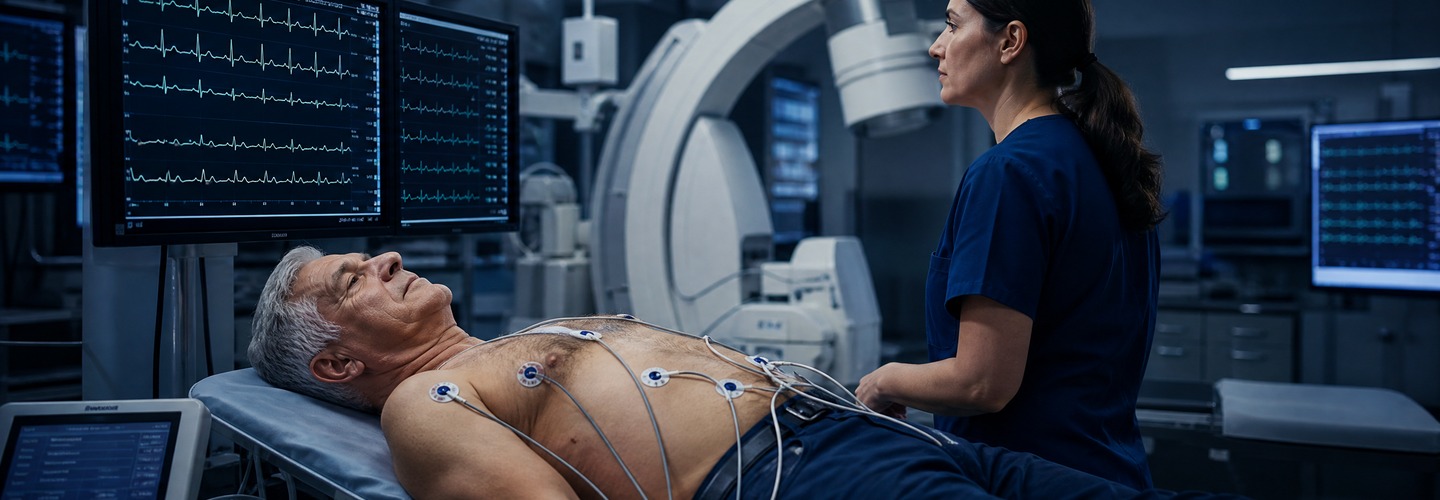
If your cardiologist needs to evaluate how well your heart handles physical exertion, they will typically order a stress test. For many patients, this involves walking on a treadmill or riding a stationary bike while connected to a heart monitor. However, not everyone is physically able to exercise vigorously enough to achieve the target heart rate required for a standard stress test. If you have joint issues, severe arthritis, balance problems, or a respiratory condition, your doctor will likely recommend an alternative. This is where the chemical stress test comes in.
A chemical stress test, also known as a pharmacological stress test, achieves the exact same diagnostic goals as a traditional exercise stress test but without requiring you to move a muscle. Instead of using physical exertion to make your heart work harder, the medical team uses a specific medication administered through an intravenous (IV) line.
This medication simulates the effects of exercise on your cardiovascular system. It causes your coronary arteries to dilate (widen) and increases the blood flow to your heart muscle, just as if you were jogging on a treadmill. By observing how your heart responds to this chemically induced stress, your cardiologist can identify areas of the heart muscle that are not receiving adequate blood supply, which is a primary indicator of coronary artery disease.
Cardiologists rely on chemical stress tests to diagnose and manage a variety of heart conditions in patients who cannot undergo traditional exercise testing. Your doctor may order this test to:
Proper preparation is essential to ensure accurate results and minimize the risk of side effects. Your doctor will provide specific instructions, but you can generally expect the following guidelines:
The entire appointment typically takes between two and three hours, though the actual stress portion of the test is much shorter. The procedure is usually performed in a hospital or a specialized cardiology clinic.
When you arrive, a technician will place small, sticky patches called electrodes on your chest, arms, and legs. These electrodes are connected to an electrocardiogram (EKG) machine, which continuously records your heart's electrical activity. An IV line will be inserted into a vein in your arm.
Before the medication is administered, the technician will take baseline EKG readings and measure your resting blood pressure. If your test includes nuclear imaging (which is very common), a small amount of a radioactive tracer will be injected into your IV, and you will lie under a special camera that takes pictures of your heart at rest.
Next, the stress medication will be infused through your IV. You will remain lying down or seated during this time. As the medication takes effect, it is completely normal to experience certain sensations. You might feel:
These sensations are temporary and simply indicate that the medication is working. The medical team will monitor your EKG and blood pressure constantly. If you feel severe discomfort, you must tell the staff immediately. They can administer a reversal agent to stop the effects of the stress medication almost instantly.
Once your heart has reached the target stress level, a second dose of the radioactive tracer is injected, and the stress medication is stopped. You will then undergo a second round of imaging under the camera. The doctor will compare the "resting" images to the "stress" images to see if there are any areas of the heart muscle that do not receive enough blood flow when the heart is working hard.
Once the imaging is complete, the IV and electrodes will be removed. The effects of the stress medication wear off very quickly, and you should feel back to normal within a few minutes. You can usually resume your normal diet, activities, and medications immediately, unless your doctor tells you otherwise.
A cardiologist will review the EKG data and the images to compile a final report. Your doctor will schedule a follow up appointment to discuss the results with you. If the test shows reduced blood flow, it may indicate a blockage, and your doctor will discuss the next steps, which could include medication changes or further procedures like an angiogram.
A chemical stress test is a safe, effective, and vital diagnostic tool for patients who cannot perform physical exercise. It provides the critical data your medical team needs to protect your cardiovascular health.
If you have been experiencing heart symptoms or need a comprehensive cardiac evaluation, the expert team at Cardiac Care Associates is here to provide the highest standard of care. We utilize state of the art diagnostic testing to deliver accurate answers and personalized treatment plans.
Call Cardiac Care Associates today at (703) 481-9191 to schedule your appointment and take the next step toward a healthier heart.
Disclaimer: The information provided in this article is for educational purposes only and is not intended as a substitute for professional medical advice, diagnosis, or treatment. Always seek the advice of your physician or other qualified health provider with any questions you may have regarding a medical condition. If you think you may have a medical emergency, call your doctor or 911 immediately.

Cardiac Care Associates welcomes Dr. Ju Young Sally Bae, MD, FACC, an interventional cardiologist bringing advanced expertise in complex coronary care, cardiovascular disease, and patient-centered treatment.

Cardiac Care Associates welcomes Joseph Lee, PA-C, an inpatient cardiovascular physician assistant dedicated to collaborative, patient-centered care for hospitalized heart patients.

What is cardiac catheterization? Learn how this minimally invasive procedure works, what to expect during recovery, and how it helps diagnose heart conditions.
.webp)
To secure your appointment promptly, take advantage of our hassle-free online booking form.


Follow us on social media to stay updated with news and events!


